Home Additions / ADUs
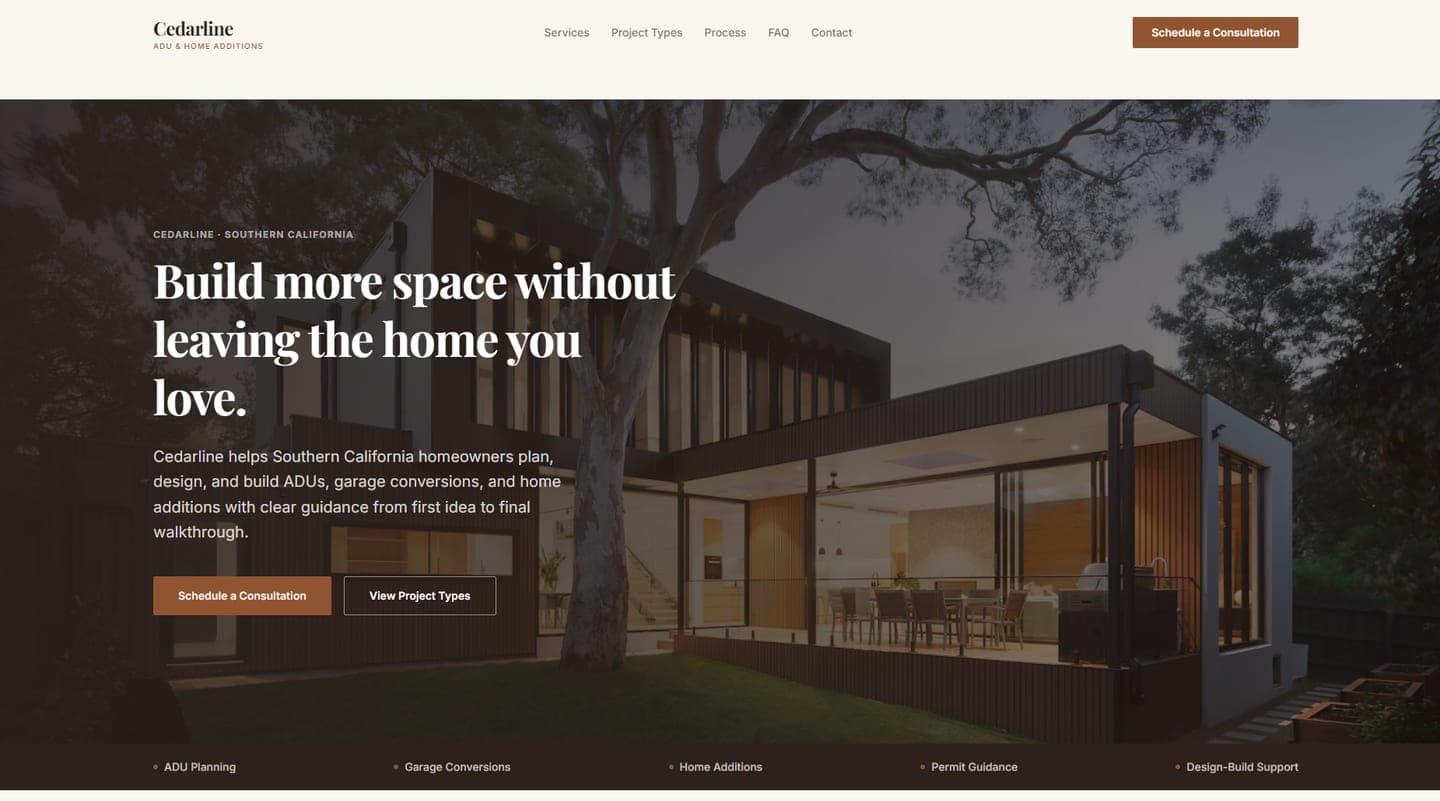
Demo ConceptCedarline ADU & Home Additions
Contractor website built to communicate project credibility, simplify the estimate process, and increase homeowner consultation requests.
View projectIndustry · General Contractors
Nobody hires a general contractor impulsively. A remodel, addition, or ADU means months of trusting one company with money, permits, subcontractors, and the finished condition of a home. Buyers research for weeks, compare several firms, and look for one signal above all: is this contractor organized? Every horror story they have heard is about chaos, so the website's real job is to demonstrate process.
That changes what converts. A published project process, from consultation through site review, scope, estimate, construction, and final walkthrough, does more persuading than any adjective. So does specificity about specialties. A firm that clearly leads with kitchens, ADUs, or tenant improvements attracts better-fit inquiries than one claiming to build anything for anyone.
Novenworks also pays attention to the inquiry itself. General contractors lose more margin to poorly qualified leads than to too few leads, so the consultation path should gather project type, scope, and timeline before anyone spends an hour on a walkthrough that was never a fit.
How Customers Choose
A documented project process signals the firm can manage schedules, subs, and surprises. Its absence suggests the chaos buyers fear most.
Homeowners planning an ADU want ADU photos and stories, not a general portfolio. Specialty proof beats breadth claims.
High-consideration buyers verify credentials and want to hear the firm speaks fluently about permits and inspections.
A defined consultation with a clear agenda feels safe. An open-ended sales visit feels like pressure, and buyers avoid it.
Where General Contractors Sites Fail
Conversion Priorities, In Order
Local Visibility Opportunities
How Reviews Work in This Trade
A remodel review is a trust document, and length is a feature. Buyers scrutinize whether the contractor communicated, held the schedule, handled surprises, and left the site clean, so invite reviews at final walkthrough with a prompt that touches those themes. A modest number of detailed reviews outperforms a wall of five-star one-liners for this trade, and a thoughtful public reply to the rare critical review demonstrates exactly the professionalism buyers are screening for.
The Recommended System
Related Services
Website Design
Turn more of the people who find you into calls and quote requests.
Conversion Optimization
More inquiries from the traffic you already get.
Business Growth Consulting
Know exactly what to fix first, and what to stop paying for.
Lead Follow-Up Systems
Stop losing jobs because nobody replied fast enough.